AI writes code fast. You still have to prove it works.
Etiq builds a live lineage graph from your Python scripts, persists data at every stage, and lets you run targeted tests against real captured data. When something fails, you trace upstream instantly and verify fixes before you ship.
Try the extension →Works in VS Code and Jupyter

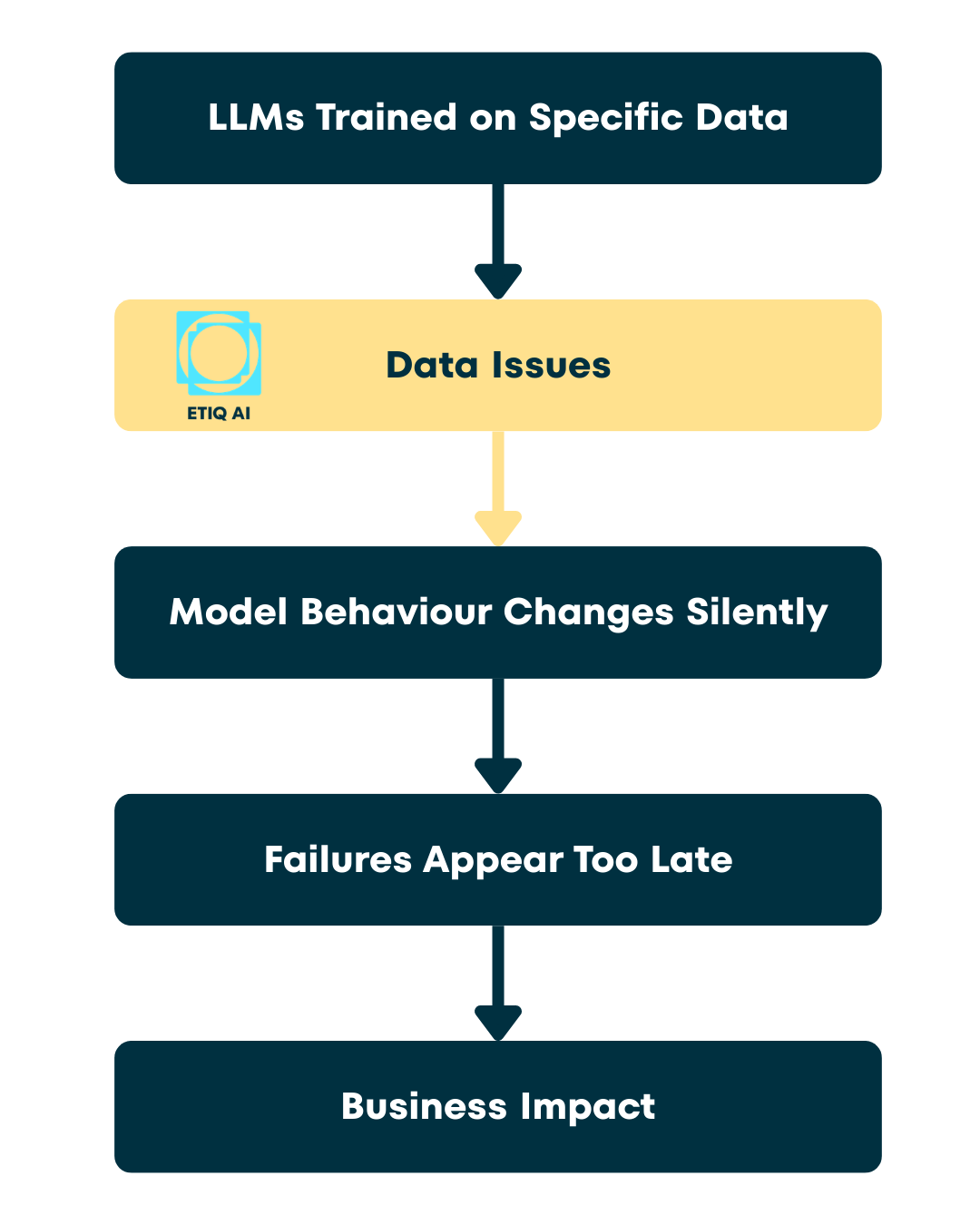


When something goes wrong in an AI system, the symptom appears in production, but the root cause is usually buried far upstream. A data frame was silently reshaped. A merge introduced duplicates three steps back. An AI coding assistant hallucinated a transformation that looked plausible but broke downstream logic.
The issue isn’t monitoring.It’s that nothing captures how code and data interact across the full pipeline. Data scientists hold that complexity in their heads. When things break, they trace backwards manually, line by line, writing throwaway test code to isolate the issue. It's slow, it's error-prone, and it doesn't scale.
What's missing isn't more tools.
It’s an integrity layer, a verification system between humans and AI assistants that ensures what’s being built actually works, at every stage, against real data.

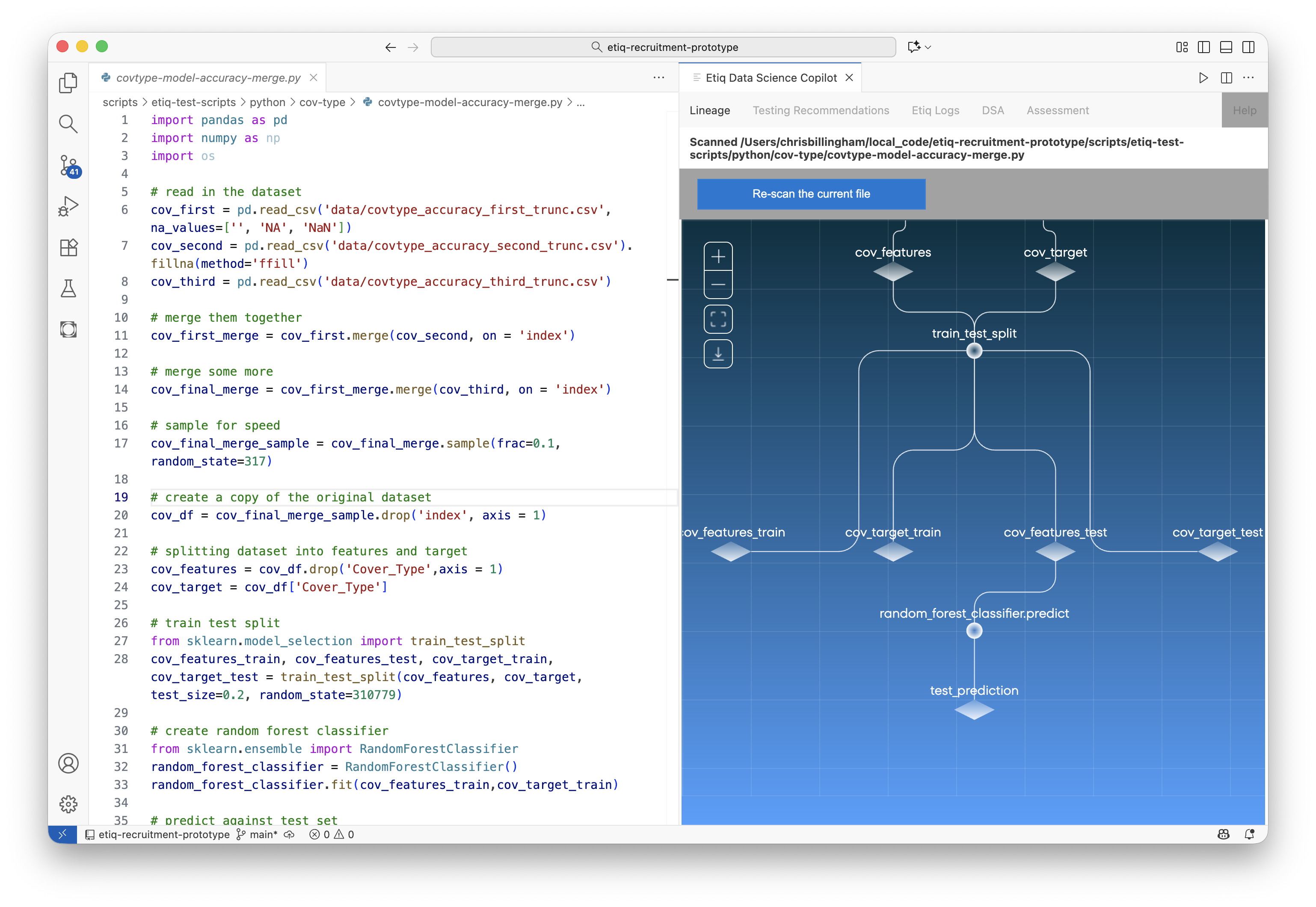
Etiq is a developer tool that works inside VS Code and Jupyter Notebooks, where data scientists already work. When it scans a Python script, it doesn't just read the code. It builds a network representation of how data objects and code functions interplay across the full pipeline, and it captures a copy of every data object at every stage.
This is the foundation. Because Etiq holds the lineage (how everything connects) and the data (what's actually flowing through), it can do something no other tool can: test, debug, fix, and document your pipeline without you writing a single additional line of code.


Code is written and read as a linear sequence of lines. But what's actually happening is far more complex: data splits, merges, gets transformed in parallel paths, and recombines.
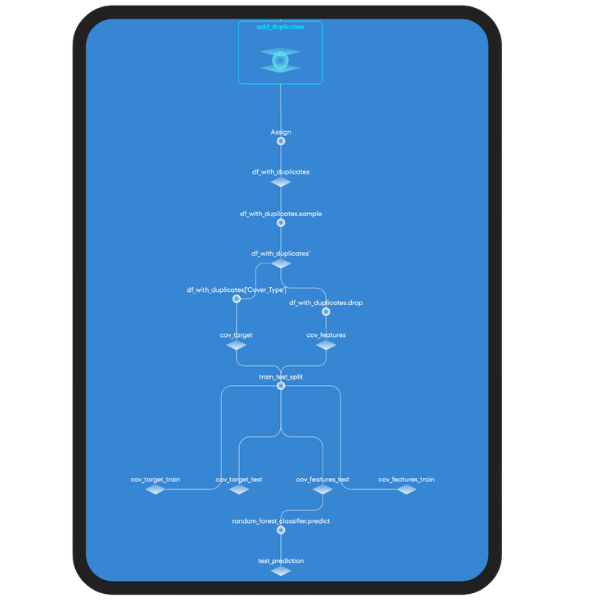
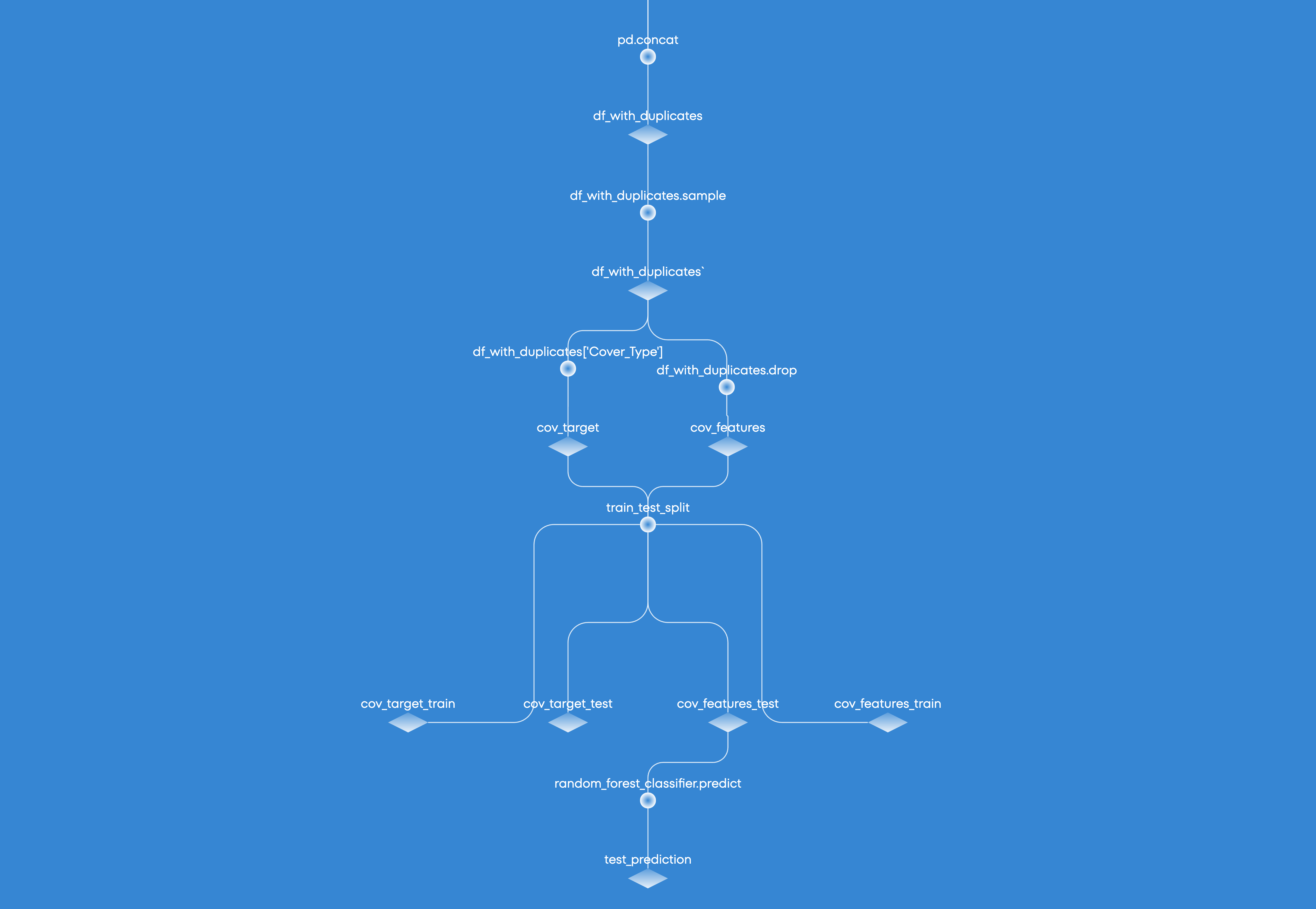
Etiq pulls that complexity out of your head and puts it on screen as an interactive visual network. Data objects appear as diamonds; functions as nodes.
Even a simple 60-line script produces a surprisingly complex graph. At 300 or 3,000 lines, across multiple files, the lineage becomes essential for understanding what your pipeline actually does.
Normally in Python, data only exists while the script runs. Once it finishes, everything disappears unless you've explicitly saved it. If you want to inspect what a data frame looks like at line 35, you have to write extra code.
Etiq removes that limitation. It captures a copy of every data object at every point in the pipeline and holds it persistently. This is what makes verification possible — every test runs against actual captured data, not assumptions.

At every point in your code, Etiq recommends the right tests to run, data quality, distribution, sparsity, missing values, duplicates, outliers, and model performance metrics.
Tests run directly from the Etiq side panel. No test code to write, no output to parse, no cleanup afterwards. The right test, at the right point, against the real data, in one click.

When a test fails, Etiq's Data Science Agent traces the failure back through the lineage network, not just line by line, but following the actual data flow.
It tests at every upstream node until it finds the first point where the issue appears, then shows you exactly which lines and data objects are affected. No more manual detective work.

The agent doesn't just find the problem, it suggests a targeted code fix at the precise point where the issue originated, and then verifies that the fix actually works by re-running the tests against the real data.
This is a closed loop: identify → trace → fix → verify. Unlike AI coding assistants that suggest and hope, Etiq confirms.

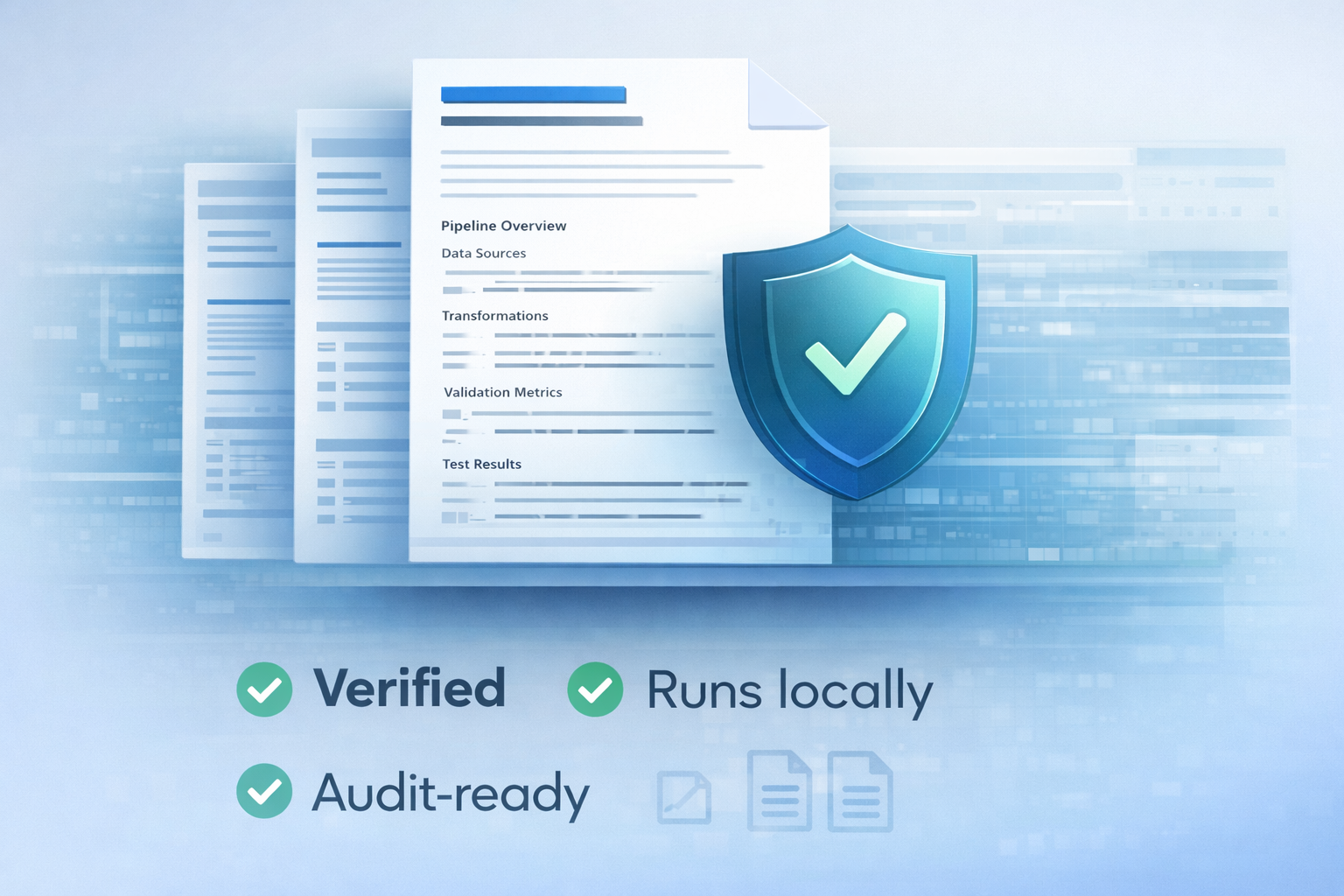
Etiq auto-generates structured documentation that explains your pipeline, what data is used, how it's processed, what transformations are applied, how models are built.
For regulated industries where you need to explain why a pipeline works the way it does, this turns a week-long documentation exercise into a button press.

Inside your IDE: Etiq installs as a VS Code extension (and supports Cursor, Kiro, and other VS Code-family editors) and Jupyter Notebooks. No new environment to learn. Up and running in minutes.
AI is now embedded in critical decisions. But most organizations scale AI without a control system behind it.
Local-first and private: Lineage, testing, and root cause analysis run entirely offline.Sensitive data never leaves the machine.For regulated environments, Etiq provides a verification layer that ensures
AI systems behave as intended, performance remains stable, and risk is contained before it becomes visible to customers or regulators.
LLM-agnostic: When Etiq does interact with an LLM (only for fix suggestions), it works with whatever provider you use: Azure, Gemini, Claude, Ollama, or any API-accessible model.
No vendor lock-in. Only minimal, relevant code segments are sent, keeping token usage low and hallucination risk controlled.

Etiq reduces the cognitive load of holding complex data flows in their heads, eliminates the grunt work of writing test code and tracing bugs manually, and lets them stay focused on the work that actually matters: design, feature engineering, and modelling.

A visual lineage removes subjectivity from code review and speeds it up. Consistent, automated testing means quality no longer depends on individual style. New team members can understand existing pipelines visually instead of reading hundreds of lines of undocumented code.

Auto-generated documentation satisfies governance and regulatory requirements for model validation and audit trails. Verified fixes mean fewer errors reaching production. And because Etiq runs locally and works offline, it meets the security standards of financial services, insurance, and other regulated industries without compromise.


Install the VS Code/Jupyter extension and see your lineage, run tests, and trace failures in minutes. No sales call required.